Can You Use a Glass Pot for a Simmer Pot on a Gas Stove?
TL;DR
No for U.S. Pyrex glassware, and no for other glass bakeware unless that pot's own manual says the stovetop is allowed. The Pyrex FAQ says not to use Pyrex glassware on a stovetop, an open flame, or an electric burner. Use a metal saucepan on low, with water in the pot, while you are home, or use a candle warmer. Manufacturer guidance varies, and a heat diffuser is not a general pass for glass.
The short answer
U.S. Pyrex glass bakeware is not for a stovetop or an open flame, and other glass bakeware should be treated the same way until that product's own manual says otherwise. The Pyrex FAQ says: do not use Pyrex glassware on the stovetop (open flame, electric burner), under the broiler, in a toaster oven, or on a barbecue grill. The Pyrex safety and usage page says: do not use it on or under a flame or other direct heat source, including on a stovetop, under a broiler, on a grill, or on a camping stove or open flame. Manufacturer guidance varies.
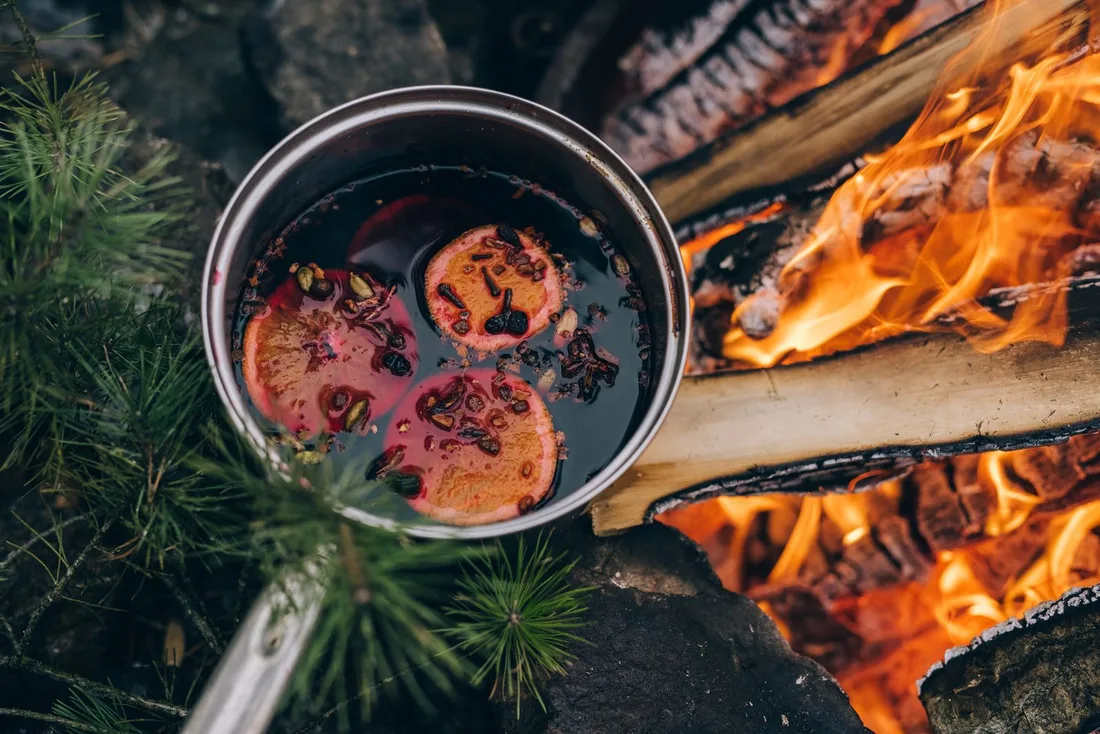
A simmer pot on this site is a small metal saucepan of water, fruit, and whole spice on low heat. That is the pot in the base recipes. The flameless alternative is a small bowl on a warmer, with no burner. A glass vessel belongs on a gas burner only when the company that made that exact pot says, in the current manual, that it is for the stovetop. Some of those manuals also require a heat diffuser on gas. Follow that manual. Do not borrow the rule from a different brand.
Why a glass dish cracks on a burner
The failure the makers warn about is direct heat, and a sudden temperature change. This page does not add a lab temperature, a break rate, or a test of its own.
The Pyrex safety page names breakage from sudden temperature change as the first risk of glass and ceramicware. It says to avoid sudden temperature changes, not to add liquid to hot glass, and not to set hot glass on a cold, wet, or metal surface. The FAQ says stovetop, broiler, toaster-oven, and grill use exposes Pyrex glassware to potentially damaging direct heat sources, and that adding liquid to hot glass may compromise its strength and can lead to breakage.
A gas flame heats one spot on the bottom of the vessel. That is the direct-heat case those warnings describe. The instruction to follow is the one printed by the maker of the dish you have, not a guess from the thickness of the glass.
U.S. Pyrex and ordinary glass bakeware
U.S. Pyrex states the ban in more than one place, and the wording agrees. Quotes below are from the pages linked here, checked when this article was written.
- The FAQ asks whether a Pyrex dish can go in a broiler, on a stove top, on a grill, or in a toaster oven. The answer is no: do not use Pyrex glassware on the stovetop (open flame, electric burner), under the broiler, in a toaster oven, or on a barbecue grill.
- The same FAQ says Pyrex glass bakeware is not to be used with any direct heat source such as on the stovetop or under the broiler. It also says not to use a Pyrex glass dish over a chafing-dish candle or Sterno, and not in an air fryer, because those are direct heat.
- The safety warnings say do not use the glassware on or under a flame or other direct heat source, including on a stovetop. The same block says not to use it with a list of countertop appliances, including a toaster, a countertop oven, a multi-cooker, an air fryer, and a slow cooker.
A baking dish, a mixing bowl, and a measuring cup are the glassware those pages are talking about. The FAQ does not carve out a simmer pot, a bowl of water, or a low flame. Low heat is still a stovetop.
The FAQ also answers soda-lime versus borosilicate. It says the company makes both, that soda-lime is slightly more resistant to impact breakage, that borosilicate is slightly more resistant to extreme thermal changes, and that the two share the same use-and-care instructions. Those shared instructions include the stovetop ban. A borosilicate label on a Pyrex dish is not permission to set it on a gas burner.
What "rated for the stovetop" means
It means the company that made the pot you are holding says that pot can go on a hob, in the instructions that shipped with it or on the current product page. It does not mean the glass looks thick, and it does not mean the box says borosilicate. Manufacturer guidance varies. Brands, and glass types, do not say the same thing.
One contrast, not a product to go buy: Kavalierglass's English instructions for SIMAX say that on a gas stove you can use SIMAX blown products when using a diffuser. The same page says thin-walled blown products can be used on electric and gas hobs, and it says to heat or cool the dishes gradually and not to pour cold water into hot dishes. The SIMAX flame-diffuser page describes that piece as for cooking or heating on a gas stove (glass kettles and pots).
That is one manufacturer's current English instruction for its own blown ware. It is not a rule for every saucepan, borosilicate or otherwise, and it is not a way to put a Pyrex baking dish on a gas burner. Pyrex does not offer a diffuser exception. A flame diffuser is not generally safe, and this site does not say that sliding any diffuser under a glass dish makes that dish safe. Use a diffuser only when the manual for the pot in your hand currently requires one, and only for that pot.
The same SIMAX page describes thick-walled pressed glass — baking pans, casserole dishes, and bowls — as for ovens, including microwave and hot-air ovens. The gas-hob sentence is about blown products with a diffuser, not about every SIMAX dish. The page says to respect the pictograms on the packaging.
| What the page is about | What that maker's page says |
|---|---|
| U.S. Pyrex glassware | Not for a stovetop, open flame, electric burner, broiler, toaster oven, or grill. Soda-lime and borosilicate share that rule. |
| SIMAX blown products | The maker's English page allows a gas stove when a diffuser is used. That is one manual, not a general clearance. |
| SIMAX pressed bakeware | Described for ovens, including microwave and hot-air ovens. Not written there as a gas-hob product. |
What to do instead
Use the metal saucepan in the base recipes: water, fruit, and whole spice, low heat, water topped up, and the burner off when you leave the kitchen or go to sleep. The watch-the-pot and keep-water-in-it rules, with the fire notes, are on the safety page.
The U.S. Fire Administration cooking page says cooking is, by far, the leading cause of home fires and home fire injuries, and that unattended equipment was the leading factor in nonconfined home cooking fires (37%). Its instruction is to stand by the pan, and to turn the burner off if you leave the kitchen. The NFPA home cooking fires report says unattended cooking was the leading factor contributing to cooking fires and casualties, and that when simmering, the cook should stay in the home and check the pot regularly. The lid-on, burner-off steps for a small stovetop fire are collected on the safety page from the NFPA cooking safety tip sheet.
If you do not want a burner, use the flameless alternative. That page is a warmer and a small bowl, not a gas stove. It says to check the water every 30–60 minutes and never let the bowl run dry on a live plate, because a dry bowl on a live plate is how that glass cracks. A warmer is not a license to put bakeware on a flame.
Our recommended picks
As an Amazon Associate, we earn from qualifying purchases. Links below are affiliate links marked as sponsored — a qualifying purchase may earn us a commission at no extra cost to you.
Farberware 2-quart stainless saucepan
Stainless steel, made for the stovetop — the metal pan the base recipe assumes.
Small enamel-on-steel pot
Enamel over carbon steel, listed by the maker for gas and induction stoves.
Candle warmer plate
The flameless option: a plate that heats from below. Check its manual allows a water bowl.
Frequently asked questions
Can I use a Pyrex bowl or measuring cup on the burner?
No. The Pyrex FAQ's answer for the stovetop is about Pyrex glassware, and it does not make an exception for a bowl, a measuring cup, or a low flame. Do not use it on the stovetop (open flame, electric burner), under the broiler, in a toaster oven, or on a barbecue grill. If a specific Pyrex product's own current manual says something narrower, follow that manual. The FAQ and the safety page, as they read now, do not.
What about a borosilicate saucepan?
Only if that saucepan's current manual says it is for the stovetop. U.S. Pyrex says its soda-lime and borosilicate glassware share the same use-and-care instructions, and those instructions ban the stovetop. Being borosilicate is not, by itself, a reason to set a pot on an open flame. SIMAX's English page is one example of a maker that allows its own blown products on a gas hob, and only with a diffuser. That example is not the rule for every borosilicate saucepan.
Do I need a flame diffuser?
Only if the manual for the pot you are using says to use one on gas. A diffuser is not a way to put banned bakeware on a burner, and it is not generally safe. Pyrex does not offer a diffuser exception. SIMAX's instruction — blown products, on gas, with a diffuser — applies to those SIMAX products, as that maker wrote it. Manufacturer guidance varies. If the manual is silent, or it says no, do not put the pot on the burner.
Sources
- Pyrex — Frequently asked questions
- Pyrex — Product warranties, safety and usage
- Kavalierglass — SIMAX instructions for use
- Kavalierglass — SIMAX flame diffuser
- U.S. Fire Administration — Cooking fire safety
- NFPA — Home cooking fires
- NFPA — Cooking safety tip sheet (PDF)
On this site: safety, base recipes, flameless alternative.
What this page cannot settle
Manufacturer guidance varies, and it can change. The sentences above are limited to pages that loaded for this article: U.S. Pyrex's own FAQ and safety page, and Kavalierglass's English SIMAX instructions and diffuser page. Pages on the European and international Pyrex help center (international-cookware.zendesk.com) returned 403 for this check, so they are not cited and they are not treated as a second opinion. SIMAX is an example of one maker's diffuser rule for its blown ware. It is not written here as the general rule for borosilicate pots. If your manual and these pages disagree, follow the manual for the pot you have. If that manual does not say the pot is for the stovetop, do not put it on the burner.
Stovetop, water, fire, pet, and child notes are on the simmer pot safety page.
More recipes